Play Double Dragon (US set 1) Retro Game Online
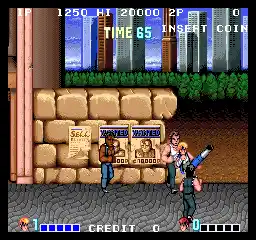
Exploring the Legacy of Double Dragon
Released in 1987, Double Dragon stands as a cornerstone of the beat 'em up genre, revolutionizing multiplayer gameplay. Its engaging storyline—a quest to rescue a kidnapped loved one—immediately captivated players, introducing them to a world of street-fighting action. With its pixelated graphics and signature moves, the game not only entertained but also influenced countless titles that followed, leaving an indelible mark on the gaming landscape.
Game Mechanics and Difficulty
The core gameplay of Double Dragon centers around cooperative play, allowing two players to team up and battle through levels filled with enemies. Players can execute a variety of attacks, including punches, kicks, and special moves. The ability to pick up weapons and items adds a layer of strategy, making each playthrough unique. The difficulty scales as players advance, with increasingly challenging foes and complex environments, keeping the momentum high and the stakes even higher.
- Cooperative gameplay allows for teamwork
- Diverse enemy types and challenging bosses
- Intuitive controls for smooth execution of combos
This balance of cooperation and competition makes Double Dragon a memorable experience, as players must strategize together to overcome the odds stacked against them.
The Cultural Impact of Double Dragon
Double Dragon not only defined a genre but also captured the spirit of the late '80s arcade culture. It inspired a slew of sequels, spin-offs, and even a feature film adaptation. The game's iconic characters, Billy and Jimmy Lee, became symbols of the fighting genre, paving the way for more complex narratives in video games. Its phrases and moves even seeped into popular culture, influencing both gaming and martial arts media.
Conclusion
Today, the legacy of Double Dragon endures, celebrated in retro gaming circles and among new players alike. Its blend of cooperative gameplay, innovative mechanics, and cultural relevance left an imprint that resonates through the ages. For enthusiasts of classic gaming, revisiting this seminal title is not just nostalgic; it's a tribute to the evolution of video games as a beloved medium of entertainment.
![The King of Fighters 2002 Magic Plus II (bootleg) [Bootleg]](https://playretrogames.org/uploads/images/the-king-of-fighters-2002-magic-plus-ii-bootleg-bootleg.webp)
![The King of Fighters 2002 Super (bootleg) [Bootleg]](https://playretrogames.org/uploads/images/the-king-of-fighters-2002-super-bootleg-bootleg.webp)
![Street Fighter II' - Champion Edition (YYC bootleg set 2, 920313 etc) [Bootleg]](https://playretrogames.org/uploads/images/street-fighter-ii-champion-edition-yyc-bootleg-set-2-920313-etc-bootleg.webp)