Play Phoenix (Taito) Retro Game Online
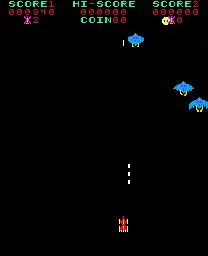
Introduction to Phoenix
Phoenix, a landmark title in gaming history, emerged as a vital player in the early days of arcade gaming. Launched by Taito in 1980, this space shooter captivated audiences with its innovative gameplay and vibrant graphics. As one of the pioneers of the vertical shooter genre, it established a formula that would influence countless games that followed, weaving its legacy into the fabric of retro gaming culture.
Core Gameplay Mechanics and Difficulty
The gameplay in Phoenix revolves around controlling a spaceship tasked with destroying waves of alien birds. Players navigate their ship at the bottom of the screen, firing projectiles to obliterate enemies descending from above. This simplistic yet addictive mechanic hooks players, compelling them to achieve higher scores and advance through progressively difficult levels. The unique aspect of Phoenix lies in its ability to challenge without overwhelming—players must develop precision and timing to succeed, creating a balance that keeps the game engaging.
Technical Innovations and Design
Taito pushed the boundaries of technology with Phoenix, showcasing not just remarkable graphics for its time but also incorporating features like layered backgrounds. The game also introduced the idea of a “boss” encounter, with larger enemy ships that required distinct strategies to defeat. These innovations paved the way for future titles and enriched the gameplay experience, making Phoenix a reference point for game developers worldwide.
Cultural Impact and Legacy
The influence of Phoenix extends far beyond its arcade cabinets. It set a benchmark within the genre, inspiring sequels and remakes, while also appearing on various home console systems. The nostalgia surrounding the game is palpable among avid retro gamers today, serving as a touchstone for a generation that grew up with its challenges. The visual and auditory elements of Phoenix resonate in modern titles, ensuring that its spirit continues to thrive in contemporary gaming culture.
Conclusion
In essence, Phoenix stands as a testament to the creativity and innovation of its time. Its captivating gameplay, technical advancements, and significant cultural impact have solidified its place in the pantheon of classic video games. Generations of players continue to celebrate its legacy, making it not just a game, but a cherished piece of gaming history that remains relevant even today.
![The King of Fighters 2002 Magic Plus II (bootleg) [Bootleg]](https://playretrogames.org/uploads/images/the-king-of-fighters-2002-magic-plus-ii-bootleg-bootleg.webp)
![The King of Fighters 2002 Super (bootleg) [Bootleg]](https://playretrogames.org/uploads/images/the-king-of-fighters-2002-super-bootleg-bootleg.webp)
![Street Fighter II' - Champion Edition (YYC bootleg set 2, 920313 etc) [Bootleg]](https://playretrogames.org/uploads/images/street-fighter-ii-champion-edition-yyc-bootleg-set-2-920313-etc-bootleg.webp)