Play Tetris (USA) Retro Game Online
Gameplay Mechanics and Difficulty
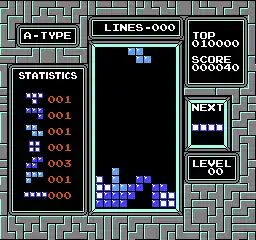
The allure of Tetris lies in its deceptively simple mechanics paired with a challenging gameplay experience that keeps players returning for more. Blocks—or "tetrominoes"—fall from the top of the screen and must be rotated and stacked to create solid lines that disappear when completed. This core mechanic encourages strategic thinking and quick decision-making, as players must react rapidly to the order in which pieces arrive. The difficulty escalates as the speed increases, making each session an exhilarating race against time.
Each level introduces new challenges, pushing players' reflexes and cognitive skills to the limit. The game's hypnotic, repetitive nature evokes a sense of zen, yet the increasing speed can lead to heart-pounding moments of panic. Many players find that mastering Tetris is an ongoing journey, as even the most seasoned gamers can find themselves in unexpectedly tight situations. This unique blend of simplicity and challenge makes it a timeless classic, one that has evolved but never lost its core essence.
Historical Background and Innovations
Tetris made its debut in 1984, created by Russian programmer Alexey Pajitnov. Initially released on the Electronika 60, the game was revolutionary in its concept, captivating players with its addictive gameplay. It quickly gained traction, transitioning to various platforms, including the Game Boy in 1989, which helped catapult it into mainstream popularity in the United States and worldwide.
The design innovations of Tetris contributed significantly to its success. The straightforward visual cues and intuitive controls allowed players from diverse backgrounds to engage easily. Notably, the appealing soundtrack, particularly the iconic "Type A" theme, resonated deeply with players, becoming synonymous with the gaming experience. Over the years, the game has spawned numerous remakes and variations, constantly adapting to new technologies while retaining its original charm.
Cultural Impact and Legacy
The impact of Tetris extends far beyond the realm of gaming; it has influenced art, music, and even cognitive science. Studies have shown that playing the game can improve spatial reasoning and problem-solving skills. Moreover, its catchy tunes are often played in orchestras and other cultural events, highlighting its significant influence on the arts.
In popular culture, Tetris has become a symbol of gaming itself, representing an era when video games started to become mainstream. From merchandise to references in films and TV shows, it remains a cultural touchstone, reminiscent of a simpler time in the gaming landscape.
Decades after its inception, Tetris continues to captivate new generations of players. Its timeless gameplay mechanics and innovative design ensure that it will forever hold a cherished place in the halls of video game history.